How to Start a Podcast for Your Brand: A Beginner-Friendly Guide
Want to start a podcast without overcomplicating it? Here’s how to choose your topic, format, setup, and content plan so your podcast actually supports your brand.
Starting a podcast sounds fun right up until you sit down to do it and suddenly convince yourself you need a studio, a content calendar, custom cover art, editing skills, a launch plan, and a completely new personality.
You don’t.
If you want to start a podcast, the goal is not to make it feel impressive. The goal is to make it make sense for your brand and your life. Because that’s where most people get stuck. They turn podcasting into this huge, dramatic project instead of seeing it for what it really is: one of the best ways to build trust, share your expertise, and create content that feels more personal than a caption and less exhausting than constantly trying to “go viral.”
And if you run a business, build a personal brand, or create content around your work, a podcast can do a lot for you. It gives people a way to spend time with you. They hear how you explain things, what you care about, how you think, and what your energy feels like. That kind of connection matters.
The key is making sure your podcast supports your brand instead of becoming one more random thing you started and now resent.
Why starting a podcast still makes sense
Podcasting still works because people are still looking for depth. They want content that teaches them something, keeps them company, or helps them feel more connected to the person behind the brand.
That matters even more right now because so much online content feels fast, repetitive, and forgettable. A podcast lets you slow things down a little. It gives you room to explain, tell stories, share perspective, and actually sound like a real human being.
It can also become one of the hardest working parts of your content strategy. One podcast episode can turn into a blog post, an email, social content, short clips, quote graphics, or talking points for future content. So when you start a podcast the right way, it is not just another thing to create. It becomes a source.
Before you start, get clear on what your podcast is actually for
Before you choose a name or start looking at microphones, get honest about the role this podcast is meant to play in your brand.
A lot of people start with, “I’ve always wanted a podcast,” which is fine, but that is not enough to build one that lasts. Your show needs a reason to exist beyond sounding fun.
Ask yourself what you want the podcast to help you do. Maybe you want to become known for a certain area of expertise. Maybe you want to connect with potential clients in a way that feels more natural. Maybe you want a place to talk about your work in more depth. Maybe you want a content format that feels less performative and more like you.
That answer matters because it shapes everything else. It helps you choose your topic, your tone, your format, and even the kinds of episodes you create.
A strong podcast is not random. It feels connected to the rest of your brand. When someone lands on it, they should understand what the show is about, who it is for, and why they should keep listening.
Choose a podcast topic your audience will actually care about
This is where you want to keep yourself from going way too broad.
A lot of beginner podcasts start with a vague idea like “business, mindset, life, creativity, and whatever else I feel like talking about.” And listen, I get the urge. But that kind of podcast is harder to grow because it is harder to understand.
The best podcast topics usually sit in the overlap between what you know, what your audience needs, and what you can realistically talk about on a regular basis without running out of steam.
So instead of trying to cover everything, get more specific. Think about the person you want to attract to your brand. What are they struggling with? What questions are they always asking? What would make them feel like this podcast was made for them?
If your brand is about visibility, then your show might focus on content, audience growth, and showing up online. If your brand supports authors, then your episodes might center around platform building, book marketing, and creative visibility. If you help small business owners with brand strategy, then your podcast should sound like an extension of that work.
You do not need the most original topic on the internet. You need one that is clear, useful, and aligned to you.
Know exactly who you are talking to
Your podcast is not for everyone, and that is a good thing.
When you try to talk to everyone, your content gets fuzzy fast. But when you know exactly who you are speaking to, everything gets easier. Your episode ideas get stronger. Your titles get better. Your messaging gets clearer. And your audience is much more likely to feel like you actually get them.
Think about your ideal listener like a real person, not a vague demographic. What stage are they in? What are they frustrated by? What are they trying to learn, fix, build, or figure out? What kind of conversation would make them want to come back next week?
That is the energy you want your podcast to be built around.
Because a good podcast is not just you talking. It is you helping someone specific.
Pick a format you can realistically keep up with
You do not need to choose the fanciest format. You need to choose the one you will actually stick with.
If you are good at teaching, storytelling, or talking things through on your own, a solo podcast can be a great place to start. If you love conversation and want to bring in other perspectives, interviews might make sense. If you like variety, a hybrid format can work well, where you mix solo episodes with occasional guest conversations.
The mistake people make is choosing a format based on what seems the most impressive instead of what feels manageable. Interview podcasts can be amazing, but they also come with more moving parts. You have to find guests, coordinate schedules, prep questions, record the conversation, and often do more editing on the back end.
That is not wrong. It is just more work.
If you are brand new, simpler is usually smarter. A podcast you can actually produce is always better than the perfect concept you never launch.
Name your podcast with your brand in mind
Your podcast name should make sense for your business, your message, and the kind of audience you want to attract.
This is not the place to be so clever that no one knows what your show is about. You want the name to feel clear, memorable, and connected to your brand. It should sound like it belongs in your world.
A good podcast name gives people a quick sense of the vibe. It does not have to explain everything, but it should not feel random either. You want something that works on your website, in your content, on social media, and in conversation when someone mentions your show.
And yes, you can absolutely have personality here. Just make sure the personality still makes sense.
Plan your first few episodes before you launch
You do not need to map out the next fifty episodes. You just need enough clarity to start with confidence.
A much better approach is to plan your first five to ten episodes before you launch. Think about the topics your audience asks about all the time, the mistakes they keep making, the myths you want to bust, the stories you can share, and the conversations that naturally connect to your work.
This helps in two ways. First, it keeps you from panicking after episode one. Second, it makes your show feel more intentional from the beginning.
Your early episodes are important because they teach your audience what your podcast is about. They help people understand what they can expect from you and whether this show belongs in their regular rotation. So choose topics that reflect what you want to be known for.
That part matters more than people think. A podcast is not just something you publish. It helps shape your positioning.
What do you actually need to start a podcast?
You need a clear topic, a specific audience, a simple format, a decent microphone, headphones, recording software, and a plan for your first few episodes. You do not need expensive equipment or a fully built out studio to begin.
That’s the answer people usually need, so let’s make this way less dramatic than the internet loves to make it.
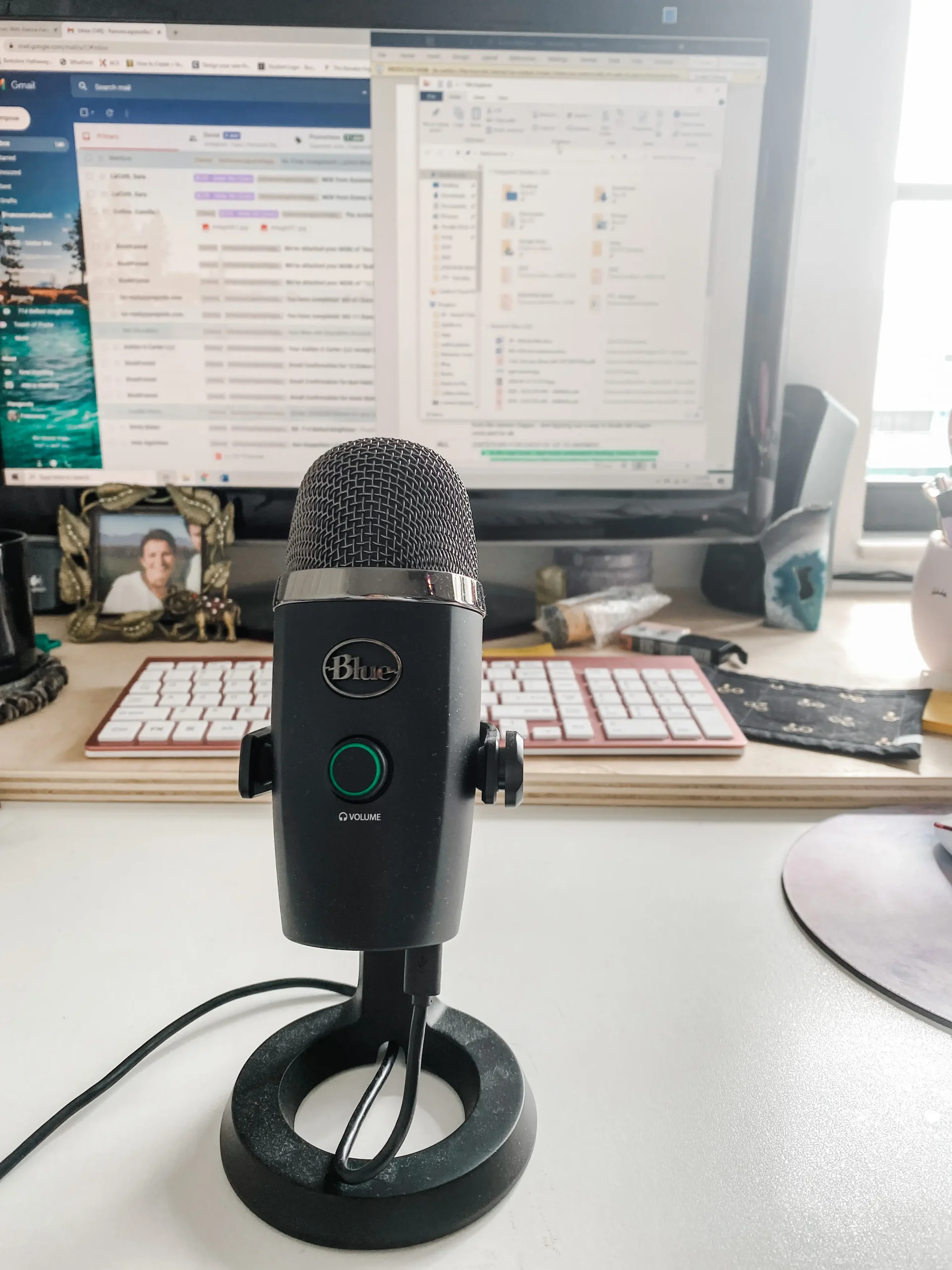
A beginner podcast setup can be very simple. A good microphone, headphones, a quiet place to record (you can even go in a closet, seriously), and software that lets you capture and edit your audio is enough to get going. Clear audio matters, but you do not need a setup that makes you feel like you are launching a media company on day one.
Someone asked what is the best editing software during one of our co-working sessions, so if you are interested in that check out our Riverside vs Descript comparison.
What matters most is that your process feels easy enough to repeat. If your setup is too complicated, too expensive, or too annoying, you are much more likely to keep putting it off.
You can start recording a podcast right from your phone!
So start with what you need to sound clear and professional enough. You can upgrade later.
Should you start with audio only or think about video too?
If you are starting a podcast now, it is smart to at least think about video from the beginning.
That does not mean you need a full filmed setup on day one. It does mean you should be aware of where content is heading and how podcasting is changing. More creators are building shows that can work in both audio and video formats, and that gives them more flexibility when it comes to reach, repurposing, and future growth.
Even if you begin with a simple audio first setup, it helps to think ahead. Could you eventually record video too? Could your space support that later? Could your episodes become clips or visuals down the line?
If you want the bigger picture on that, read my post on Video Podcasting Is the Future. It’s a good next read if you’re deciding how you want your show to grow.
Focus on consistency, not perfection
This is the part I really want beginner podcasters to hear.
Your first episode does not need to sound perfect. Your intro does not need to be genius. Your delivery does not need to be flawless. You do not need to launch like you have a whole production team behind you.
You need to start.
Podcasting gets better through doing, not through overthinking. The more you record, the more natural you sound. The more episodes you publish, the more you learn what your audience responds to. The more you show up, the easier it becomes to refine your voice, your structure, and your rhythm.
So instead of chasing perfection, focus on creating a publishing rhythm you can actually keep. Weekly is great if that feels doable. Biweekly is also great. The best schedule is the one you can sustain without wanting to disappear.
Consistency builds trust. It also builds confidence.
Make your podcast part of your content strategy
This is where podcasting becomes especially valuable for you.
Your show should not live off to the side like a separate little project that has nothing to do with the rest of your brand. It should support the bigger picture.
A podcast can help you deepen your authority, expand on topics you already talk about, create more searchable content, and give your audience another way to connect with you. It can support your blog, your email list, your offers, and your visibility as a whole.
That is why it helps to think beyond the episode itself. What else can this conversation become? How does it tie into your expertise? What does it reinforce about your brand? Where does it lead people next?
When you ask those questions, your podcast stops feeling like one more content task and starts feeling like a real brand asset.
Common mistakes beginners make when starting a podcast
One of the biggest mistakes is starting without enough clarity. If you do not know who the show is for or what it is meant to help you do, it is very easy for the podcast to feel scattered.
Another common mistake is overcomplicating the setup. So many people delay starting because they think they need better equipment, more time, more training, better show graphic or intro and a more polished plan. Most of the time, what they actually need is a simpler process and a little less pressure.
There is also the mistake of being too broad. A podcast does not have to cover every part of your personality or business. It just needs to be clear enough that the right person instantly knows it is relevant to them.
And finally, a lot of people treat their podcast like a standalone project instead of part of their overall brand. That is a missed opportunity. The more connected your show is to your message and your content, the more useful it becomes.
Final thoughts: start simple and build as you go
If you have been waiting until you feel more ready, this is your reminder that most good podcasts do not begin with perfect plans and polished systems. They begin because someone finally stopped making it bigger than it needed to be.
You do not need to do the most. You need a clear topic, a clear audience, a format that works for you, and a setup simple enough that you will actually use it.
That’s it.
Your podcast can get more refined over time. It can evolve. It can grow with your brand. But none of that happens until you start.
So keep it simple. Make it useful. Let it sound like you.
That is more than enough to begin.
FAQ: How to start a podcast
Yes. A podcast is still one of the best ways to build trust, share your expertise, and create deeper content around your brand. It also gives you content you can repurpose across your other platforms.
No. A decent microphone, headphones, recording/editing software, and a quiet place to record are enough for most beginners.
A good starting point is five to ten episode ideas. That gives you enough direction to launch without overwhelming yourself.
You can absolutely start with audio, but it is smart to think ahead about video. More creators are building podcasts with both formats in mind, especially as video podcasting continues to grow. So if you can, start with video.
A podcast supports your brand when it speaks to the right audience, reinforces your expertise, fits your messaging, and connects naturally to the rest of your content and offers.